

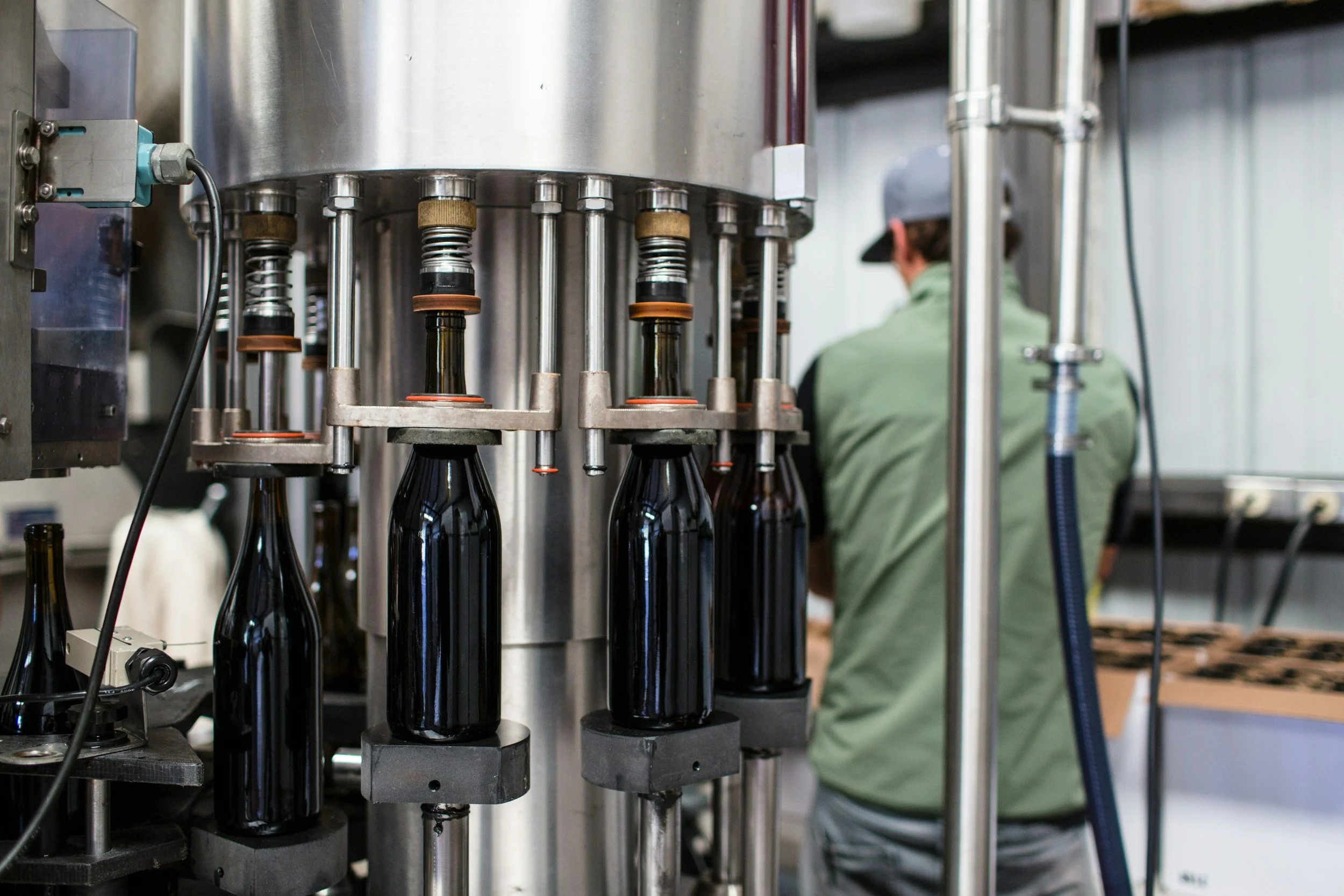
Clean Air In. Clean Water Through. Clean Product Out.
Filtration for food and beverage facilities — HVAC and contamination control, compressed air for packaging lines, and process and CIP water filtration, all in one place.
Airborne Contamination Doesn't Stay Where It Starts.
Food and beverage facilities are required to control more than what's visible. Under FDA cGMP rules, facilities have to maintain ventilation, filtration, and airflow control that limits vapors, odors, and particulates capable of compromising food safety. USDA-regulated meat, poultry, and egg facilities fall under their own sanitation standard, with the same underlying goal — keep airborne hazards out of product zones.
The scale of the risk is easy to underestimate. A single air handling unit moving 100,000 cubic feet per minute can carry millions of bacteria into a building every minute if it's running on filtration that isn't matched to the job. Mold spores, allergens, and ordinary dust move the same way — quietly, constantly, and directly into spaces where product is exposed.
This isn't about meeting a single number. There's no one universal air quality threshold that applies to every product or process — it's a facility-specific risk to manage, not a box to check.
If It Touches Food or Packaging, It Needs to Be Clean.
Compressed air gets used in more places on a food or beverage line than most people realize — blow-off, conveying, motion control, and direct product contact at the end of the line. Every one of those uses is a potential contamination point if the air isn't properly filtered.
Federal cGMP rules don't hand you an exact number for required air purity in direct food contact applications — that determination is left to the facility. Industry groups like 3A Sanitary Standards, the British Compressed Air Society, and the Safe Quality Food program publish guidance most operators use to set their own targets.
What inspectors do expect is documentation — evidence of filter maintenance, condensate management, and air quality verification on your compressed air systems. Oil-lubricated compressors are allowed, but they require food-grade lubricant and the right coalescing filtration to keep oil carryover out of the air supply.
Commonly used filtration in this application includes coalescing filters, particulate filters, and sterile-grade filtration sized to where the air ends up — blow-off versus direct product contact call for different filtration levels.
Standard HVAC Filtration Wasn't Built for a Food Plant.
Food and beverage facilities create conditions that ordinary commercial HVAC filtration isn't designed to handle — open processes, fluctuating temperature and humidity, ingredient dust, and constant movement of raw material through the building. Standard filters sized for office buildings or warehouses fall short in these environments.
Properly filtered HVAC protects more than air quality on paper. It limits cross-contamination between zones, keeps allergens from migrating into product lines that need to stay allergen-free, and reduces the bacterial and mold load circulating through the facility. Getting the filtration stage right is one of the more cost-effective levers a facility has for both compliance and product integrity.
Commonly used filtration in this application includes MERV-rated particulate filters matched to production zone requirements, with higher-efficiency filtration for sensitive areas like packaging rooms or allergen-controlled zones.
Water Touches Everything — Cleaning, Ingredients, and What Goes Down the Drain.
Process water shows up everywhere in a food or beverage facility: as an ingredient, as the carrier for clean-in-place (CIP) systems, and eventually as wastewater that has to be discharged or reused. Each of those uses puts a different demand on filtration.
CIP water needs to be filtered consistently to protect downstream equipment and keep cleaning cycles effective — inconsistent water quality between cycles can undermine the sanitation program it's supposed to support. Ingredient and process water has its own purity requirements depending on the product. And wastewater leaving the facility is both a compliance question and, increasingly, a cost question — properly treated water can sometimes be reused on-site, cutting fresh water draw and reducing what has to be discharged or hauled off.
Commonly used filtration in this application ranges from bag and cartridge filtration for general process water up to more involved treatment systems for wastewater bound for reuse, depending on what's actually in the water and where it's headed next.
We Match Filtration to the Application, Not a Catalog Page.
Vast Filtration comes from a filtration background three generations deep, covering both air and liquid filtration. For food and beverage operations, that means looking at what's actually moving through your facility — air, compressed air, or water — and matching filtration to that specific application instead of a one-size-fits-all answer.
✅ We understand the application. Facility air, compressed air, and process water are three different problems, and we don't treat them the same.
✅ We have what you need. HVAC and particulate filtration, compressed air filtration, and process/CIP water filtration — matched to your actual facility.
✅ We move fast. Sanitation schedules and production lines don't wait. We don't string you along with lead times that put your schedule at risk.
✅ We don't oversell. If a simpler filtration approach solves your problem, we'll tell you — not push more than you need.
Frequently Asked Questions
Does federal law set an exact air quality standard for food facilities?
Not a single universal number. FDA cGMP regulations under 21 CFR Part 117 require facilities to maintain adequate ventilation, filtration, and airflow control to limit contamination, and USDA-regulated meat, poultry, and egg facilities follow their own sanitation standard under 9 CFR Part 416. The specific filtration level needed is determined by the facility, often guided by industry standards bodies rather than a single federal number.
Does compressed air used in food production need to be filtered?
Yes, especially where it contacts food directly or is used at the end of a packaging line. Federal cGMP rules don't specify an exact required purity level for this use, leaving that determination to the facility — guidance from groups like 3A Sanitary Standards and the Safe Quality Food program is commonly used to set those targets. Inspectors generally expect documented filter maintenance and air quality verification.
Can oil-lubricated air compressors be used in a food plant?
Yes, with the right safeguards. Oil-lubricated compressors are allowed in food facilities provided they use food-grade lubricant and adequate coalescing filtration to prevent oil carryover into the air supply, along with regular oil carryover testing.
Can process or CIP water be reused instead of discharged?
In many cases, yes, depending on what's in the water and what it's being reused for. Properly filtered and treated water can sometimes be reused on-site, reducing both fresh water draw and the volume that needs to be discharged or hauled off. The right approach depends on your water's actual contaminant load and your facility's specific compliance requirements. If air, compressed air, and water filtration are handled by different vendors at your facility, our vendor consolidation guide covers what it takes to bring those under one partner.